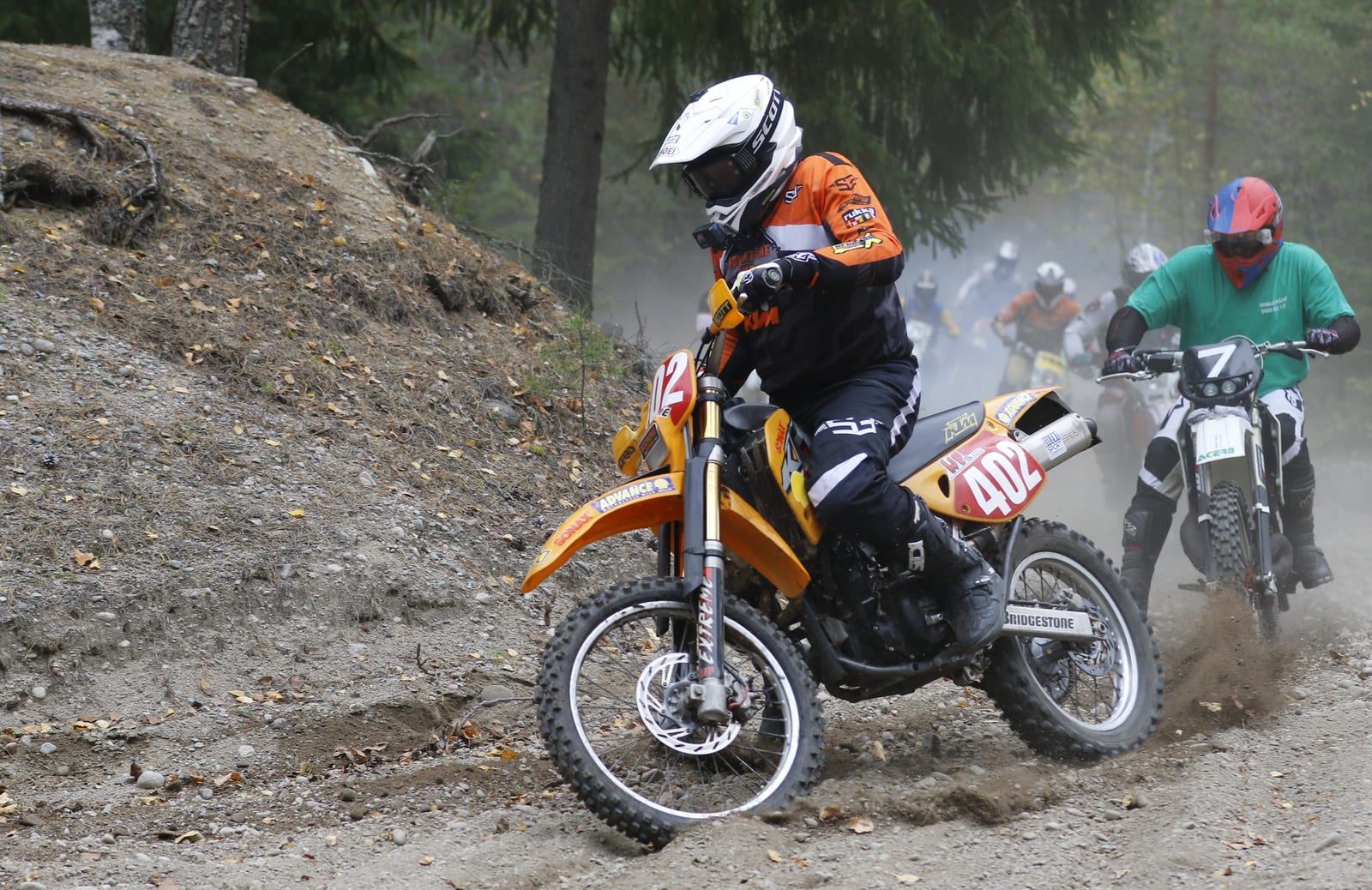
A track with a history
Erkylän lukot is not just any place. The track hosted World Championship motocross rounds 20 times between 1965 and 1985, 18 of which were in the 250 cc class and twice in the 125 cc class, in 1981 and 1985.
The first GP was held on August 1, 1965, on a rocky track that soon gained a reputation for being ruthless. In 1968, Kalevi “Kale” Vehkonen achieved his famous double victory here in the 250 cc World Championship class. The track also nurtured other great names, among them world champion Heikki Mikkola.
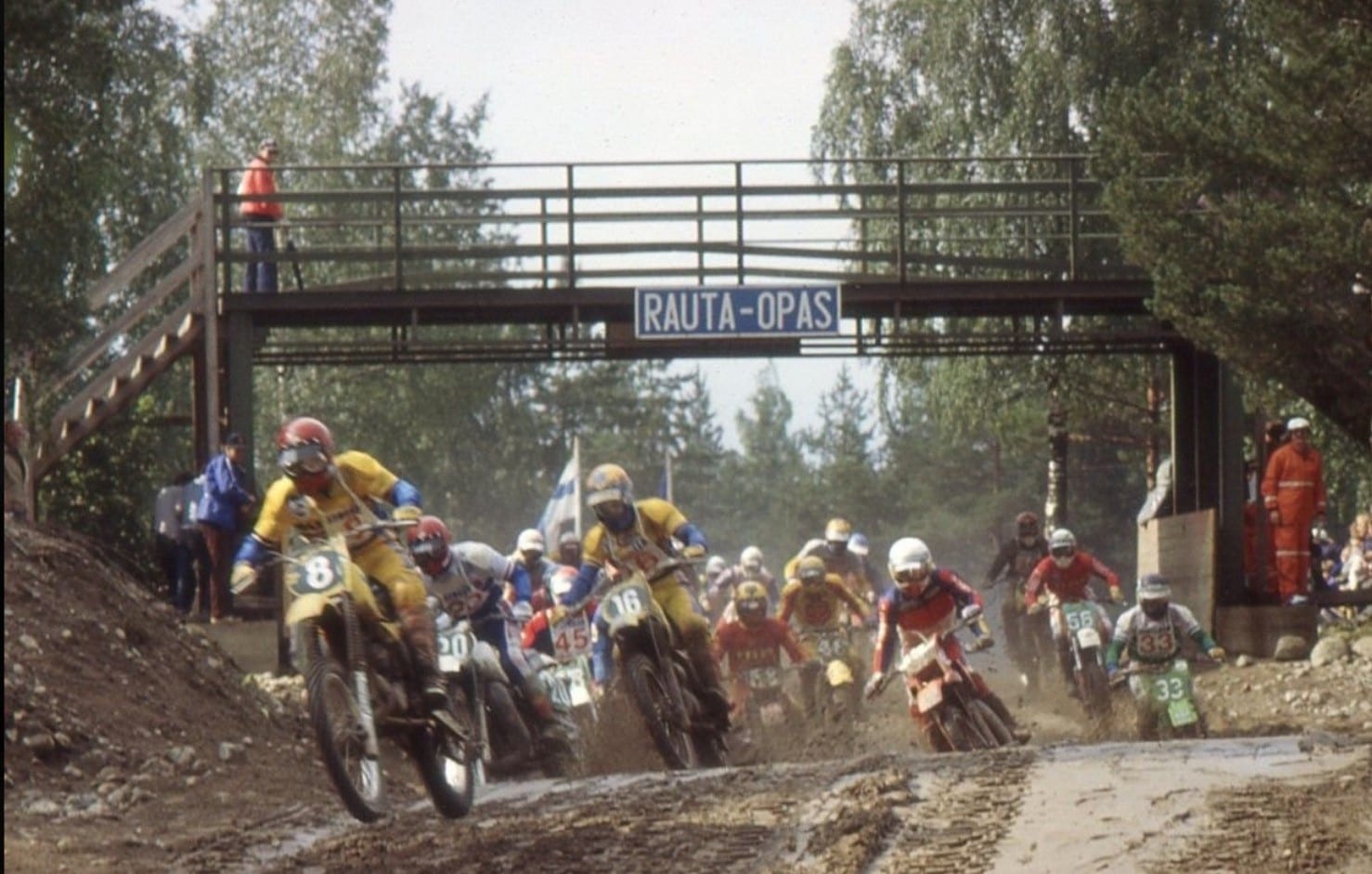
This is exactly what makes the event special. For many spectators and participants, the place holds a mental and emotional connection from years past — from their own memories or stories told by fathers and grandfathers.
The spirit of volunteerism carries on
The first Scramble was organized in 2000. The original father of the event, Erkki Petäjä, is still involved and remains a driving force.
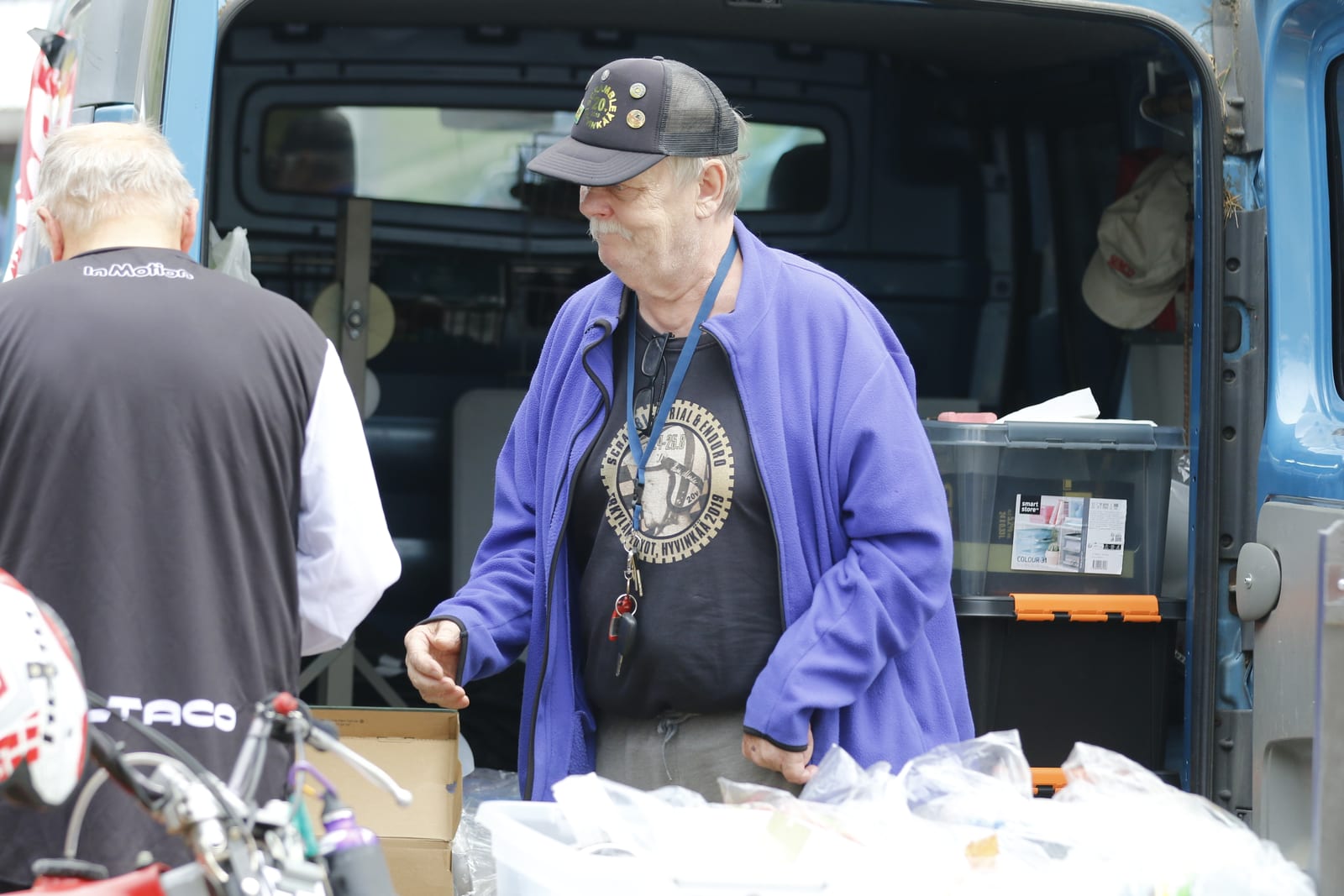
Scramble is not a competition but a demonstration ride, and that is exactly where its character stems from. Volunteerism, community spirit, and togetherness carry the event. Over the years, it has developed into, above all, a social event where people run into old acquaintances and maintain human connections.
Proof of this year’s successful event is that the spirit of volunteerism is alive. The arrangements and logistics were handled flawlessly by volunteers under the leadership of Kai Uusitalo. It goes without saying that this would not have been possible without this group and their spirit of getting things done — and it never will be.
In the light of numbers
Success is reflected in the fact that the event gathered 177 different riders and 220 registrations across six classes, as well as 27 different motorcycle brands. Several riders participated in more than one class.
The number of participants was divided among the different disciplines, with enduro gathering 61 and trial 50 participants. In addition, a total of 105 riders participated in the three Scramble classes divided by model year.
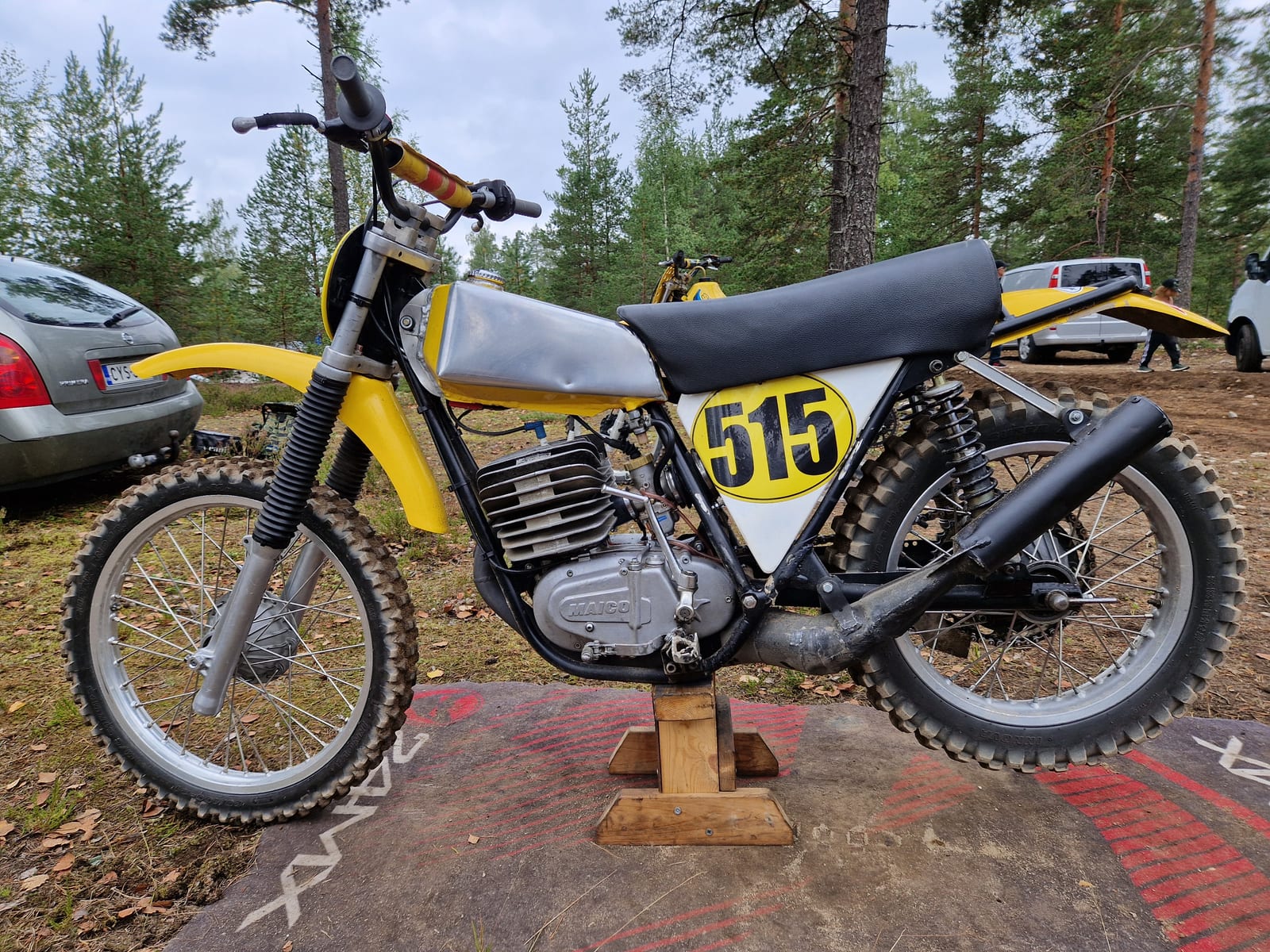
A very wide range of brands was seen at the event. The most numerous were Honda with 42, Yamaha with 31, Husqvarna with 29, Suzuki with 21, and Bultaco with 20. Alongside the most popular brands, KTM was present with 16 bikes and Kawasaki with 12, in addition to which there were rarities such as Maico, BSA, Matchless, SWM, CZ, AJS, Jawa, and Montesa.
In terms of model years, the clear majority were from the 1980s, with 110 bikes. There were 54 bikes from the 1970s, 34 from the 1990s, 18 from the 1960s, and four representatives from the 1950s.
Legends on the track and in the paddock
Over the years, numerous riders who have achieved world fame have participated, such as Heikki Mikkola, Vladimir Kavinov, Kees van der Ven, Marc Velkeneers, and Matti Tarkkonen.
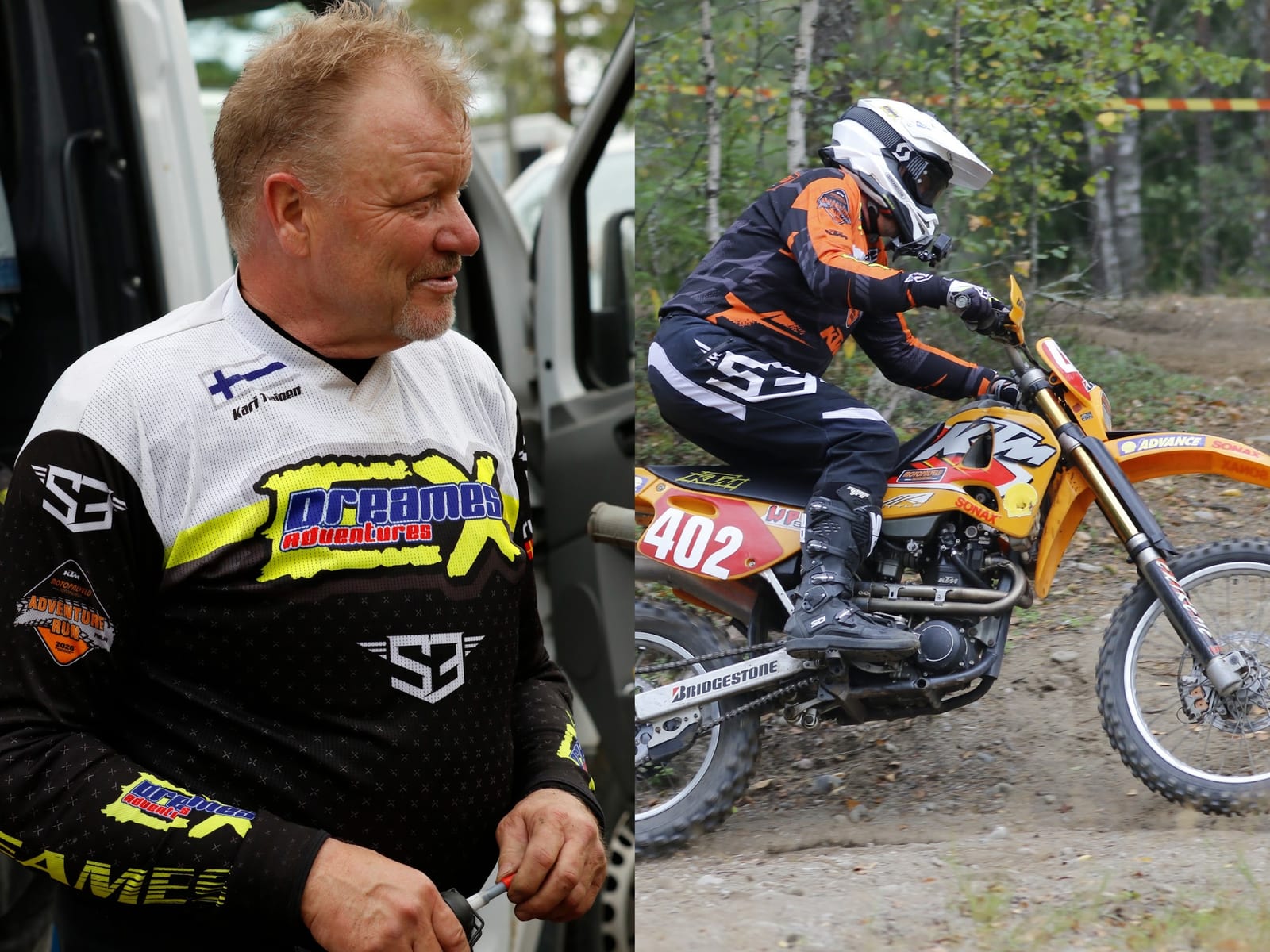
This year, the track saw, among others, Kari Tiainen, a seven-time enduro world champion, as well as Jarkko Vainio, who for years was one of Finland’s top enduro riders in the top ten and achieved a Six Days Enduro junior trophy world championship silver.
Strengthening the father-son bond were Timo and Eero Remes. Timo once achieved the Finnish motocross championship in the 125 cc class, and Eero is a three-time Finnish motocross champion and a three-time enduro world champion.
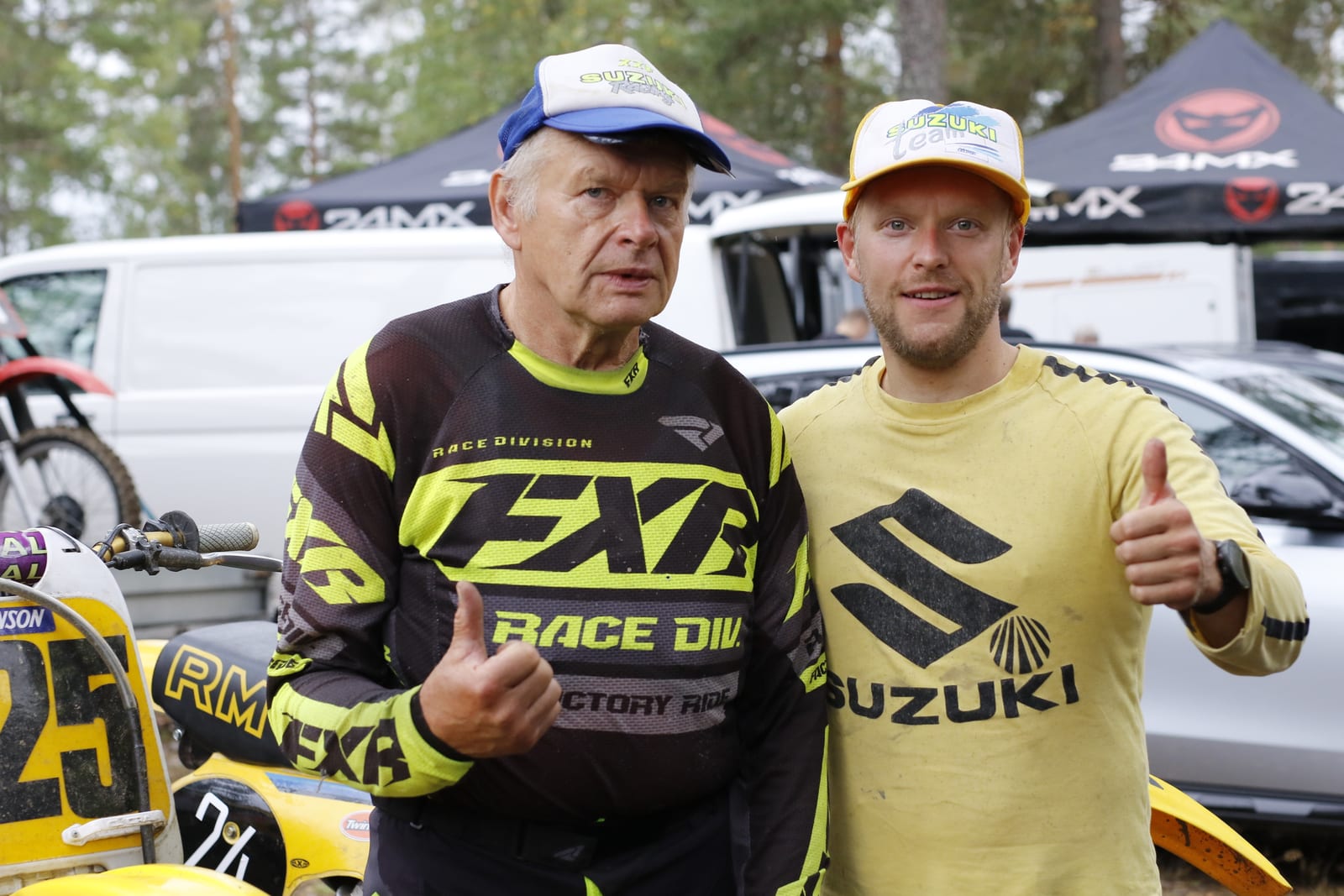
In the paddock, one could spot past achievers from the Finnish and world championship levels chatting: Matti Tarkkonen, Anssi Oksanen, Martti Pesonen, Ari Viiri, and many others.
Classics in the paddock
The salt of the demonstration ride is the bikes. The paddock was filled with classics from decades ago, and there were also genuine rarities among them.
One of them is the Solifer–Bultaco. In the 1960s, as a special project at the Solifer factory, a bike was assembled that combined the frame of a Husqvarna Silverpilen, a Bultaco engine, and a fuel tank familiar from Solifer mopeds, bearing Solifer branding. According to information, three such bikes were manufactured.
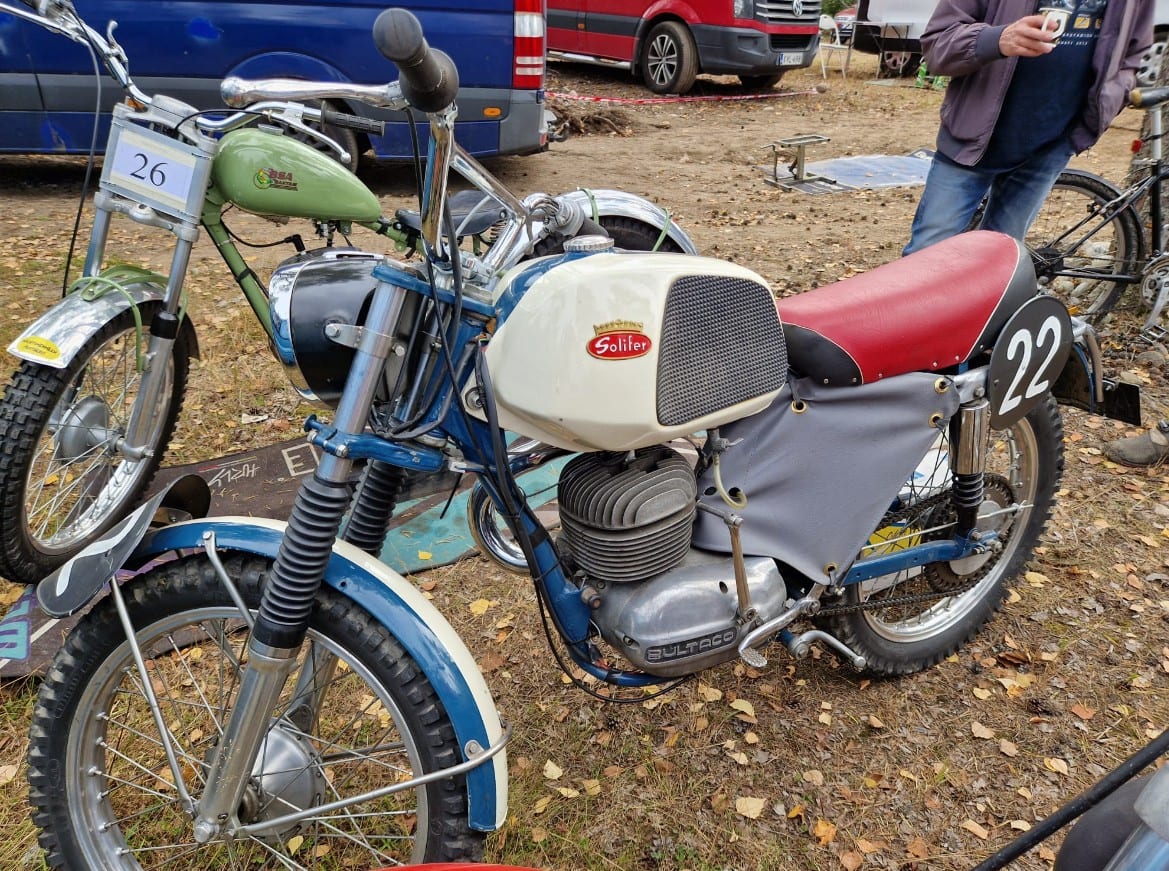
The Solifer–Bultaco participated in the Päitsi, and the bike achieved a historic class victory. Success in such a tough competition was a brilliant marketing asset for Solifer. It proved that a Finnish factory was capable of building durable and competitive machines suitable for demanding off-road riding, utilizing world-class engine components.
The audience found their way
The heath of Erkylän lukot gathered an enthusiastic and interested audience to such an extent that the reserved parking spaces were filled with cars and motorcycles, many of them classics themselves.
The paddock restaurant functioned flawlessly, serving coffee, soft drinks, pyttipannu (hash), and sausages at an affordable price. Admission to the event was free.
See the photo collection here